
-
О нас
Почему выбирают нас?
Компания Ningbo Kosda New Material Technology Co., Ltd. была основана в 2015 году и расположена в зоне экономического развития Нинбо Биньхай, Китай, которая является крупнейшим в мире глубоководным портом с точки зрения пропускной способности и цивилизованным городом в Китае. Это крупное современное производственное предприятие, которое объединяет проектирование, исследования и разработки, производство и продажу бумажной продукции. Компания придерживается принципа качественного развития, пропагандирует зеленую и экологически чистую продукцию, способствует индустриализации высоких технологий. Начиная с удовлетворения потребностей клиентов, мы предоставляем качественные и эффективные услуги.
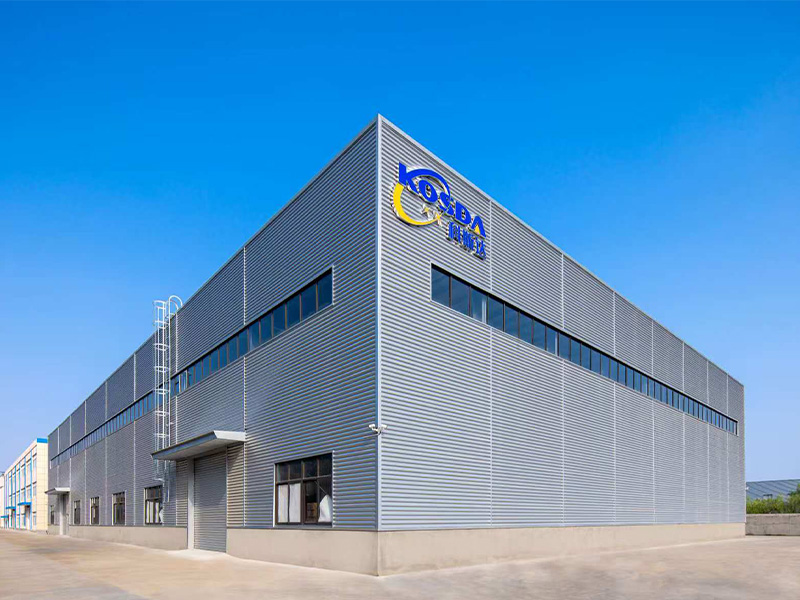 Современный производитель экологически чистых и зелёных бумажных изделий
 -
Продукты


-
Новости



Новости отрасли
What Are Printed Paper Cups? A Guide for Food Service Buyers
A printed paper cup is a disposable drinking cup made from food-grade paperboard with a thin polyethylene lining, customized with a business logo, brand colors, or promotional graphics through flexographic or digital printing. For food service operators, the direct answer is straightforward: printed paper cups combine functional food-contact safety with a low-cost branding surface that plain, unprinted cups cannot offer, and they remain the dominant packaging format for hot and cold beverages served by cafes, restaurants, catering companies, and quick service outlets. This article explains what printed paper cups are, how they are made, why food service paper cup demand continues to grow, how they compare with plain disposable paper cups and foam alternatives, and what buyers should evaluate when sourcing from a paper cup manufacturer or wholesale supplier. The following sections use verifiable industry data, clearly cited where applicable, along with practical guidance for procurement teams, cafe owners, and packaging distributors.
Throughout this guide, the term disposable paper cups refers broadly to single-use cups made primarily from paperboard, while printed paper cup refers specifically to disposable cups that carry custom artwork, logos, or promotional text. Both categories overlap heavily in commercial food service, since the majority of paper cups purchased by restaurants, coffee shops, and catering businesses today are printed to some degree, ranging from simple single-color logos to full-wrap, multi-color designs.
What Is a Printed Paper Cup and How Does It Differ from a Plain Disposable Cup
A printed paper cup is built from the same core materials as any standard food service paper cup: a paperboard base layer, a thin plastic or bio-based lining that prevents leakage, and a rolled rim for structural strength and drinking comfort. The distinguishing feature is the printed surface, which is applied to the outer layer of the paperboard before the cup is formed, allowing the artwork to wrap seamlessly around the finished cup body. Plain disposable paper cups use the identical manufacturing process but skip the custom printing stage, typically arriving in a single neutral color such as white or kraft brown.
Core Construction Elements
- Paperboard body stock, usually food-grade virgin fiber to meet hygiene requirements for direct food contact.
- A thin inner lining, commonly polyethylene (PE) or, increasingly, a compostable alternative such as PLA, that creates a liquid-proof barrier.
- A rolled top rim that adds rigidity and reduces the risk of the rim collapsing or cutting the drinker's lip.
- A heat-sealed bottom disc that locks the base to the cup wall and resists leaking under normal handling.
- An outer print layer for branded cups, applied using flexographic printing for large production runs or digital printing for shorter, more flexible runs.
Food service paper cup buyers generally select between single-wall and double-wall construction. Single-wall cups are lighter and lower in material cost, while double-wall cups add an extra layer of paperboard for insulation, which is useful for hot beverages served without a separate sleeve. Choosing between these formats, and between printed versus plain finishes, typically depends on brand priorities, beverage temperature, and order volume from a paper cup manufacturer.
Single-Wall vs. Double-Wall Printed Paper Cups: Which to Choose
One of the most practical decisions a food service buyer makes when ordering printed paper cups is choosing between single-wall and double-wall construction. A single-wall cup uses one layer of paperboard and is the lighter, lower-cost option, but it transfers heat from a hot beverage to the outside of the cup more quickly, which is why single-wall hot cups are usually paired with a separate corrugated sleeve. A double-wall cup adds a second layer of paperboard, either as a full outer wrap or as a corrugated ripple layer, which traps air between the layers and provides insulation without requiring a separate sleeve.
Practical Selection Guidance
- Choose single-wall cups with a sleeve for standard hot coffee service where cost efficiency at scale is the priority and sleeve dispensing is already part of the counter workflow.
- Choose double-wall cups for drive-through, delivery, or catering formats where a sleeve may be lost, forgotten, or impractical to attach before hand-off.
- Consider that double-wall cups generally use more paperboard per unit, which affects both material cost and the overall weight of a shipment.
- For cold beverages, single-wall construction is standard, since insulation against heat transfer is not the primary concern and condensation control is instead handled through the lining and, where needed, an outer wrap.
For a printed paper cup program specifically, it is also worth noting that a double-wall or ripple-wall format offers a second visible surface for branding, since the outer layer can be printed independently of the inner cup wall, which some cafes use to reinforce a logo or seasonal design at the point where a customer's hand naturally grips the cup.
Why Food Service Businesses Are Choosing Printed Paper Cups
Before looking at the chart below, it helps to understand the underlying business logic. A paper cup travels with the customer long after the transaction ends, often sitting on a desk, a car cup holder, or a table in a delivery photo. That extended visibility gives a printed paper cup a marketing function that most other packaging cannot replicate at a similar cost. Restaurant and cafe operators increasingly treat the cup itself as a low-cost advertising channel rather than a purely functional item. The chart below summarizes several independently reported consumer and industry statistics that explain this shift toward custom food service paper cup printing.
Why Packaging Design Matters in Food Service
The chart shows four separate metrics rather than one continuous data series, and each bar represents a distinct finding drawn from consumer and industry packaging research. The first bar indicates that roughly 80 percent of consumers say packaging design directly shapes how they perceive a brand, a pattern that has been documented repeatedly across packaging perception surveys. The second bar reflects Nielsen consumer research cited in packaging industry publications, showing that about 72 percent of shoppers are more likely to choose a product presented in eye-catching packaging over a plain alternative. The third bar, drawn from recent foodservice packaging industry surveys published in 2026, shows that around 84 percent of foodservice companies now list sustainability as a priority when selecting packaging suppliers, which is relevant because many buyers now request recyclable or compostable printed paper cup options alongside custom branding. The fourth bar shows that about 40 percent of consumers say they are likely to photograph and share food or drink packaging on social media when the design stands out, extending the reach of a printed cup well beyond the point of sale. Taken together, these four figures explain why food service paper cup programs increasingly treat the cup as a branding asset rather than a purely functional container. A plain, unprinted disposable cup cannot capture any of this marketing value, since there is no visual differentiation for a customer to notice or share. The sustainability figure is particularly relevant for procurement teams, because it suggests that packaging decisions are now evaluated on both branding impact and environmental profile at the same time, rather than as separate considerations. For a small cafe, this data suggests that even a single-color logo print run can measurably change how customers perceive product quality and consistency. For larger food service chains, the data supports a more structured packaging strategy that pairs custom printed paper cups with clearly stated sourcing or recyclability claims. It is worth noting that these percentages come from different survey populations and methodologies, so they should be read as directional evidence of a broader trend rather than as figures that can be added together or compared with statistical precision.
Material Composition and How a Printed Paper Cup Is Manufactured
Manufacturing a food service paper cup begins with die-cutting a flat paperboard blank, which is then printed, rolled into a cone or cylinder shape, sealed along a vertical side seam, and fitted with a base disc before the rim is curled for strength. The illustration below shows a simplified isometric view of a finished printed paper cup, labeling the main structural zones that a buyer should understand when comparing specifications from different suppliers.
Isometric Structure Diagram of a Printed Paper Cup
Understanding these zones helps a buyer ask more precise questions during sourcing, such as what lining material is used, whether the print inks are food-safe for the rim area, and how the base disc is sealed. Published materials-science and recycling-industry research indicates that a typical disposable paper cup is made of approximately 90 to 95 percent paperboard by weight, with the remaining portion consisting of the thin polyethylene or bio-based lining that makes the cup liquid-proof. This composition is fairly consistent across manufacturers because the paperboard provides rigidity and printability, while the lining is kept as thin as possible to minimize material cost and environmental footprint without compromising the cup's ability to hold hot or cold liquid. The rolled rim typically uses a slightly heavier paperboard specification than the cup wall, since it must resist crushing during shipping and stacking. The print zone sits on the outer surface of the paperboard, applied before the blank is formed into a cup, which allows full-wrap graphics without visible seams interrupting the design in most single-seam cup constructions. The base disc is sealed using heat and pressure rather than adhesive in most modern manufacturing lines, which improves consistency and reduces the risk of leaks at high production volumes. Buyers sourcing food service paper cups in bulk from an OEM or ODM manufacturer should confirm the paperboard basis weight, the lining type, and whether the cup is rated for hot beverages, cold beverages, or both, since these specifications affect insulation performance and cost.
Typical Material Composition of a Printed Paper Cup
Before reviewing the composition chart, it is useful to understand why the paperboard-to-lining ratio matters commercially and environmentally. Paperboard is the primary structural and printable component of any paper cup, and it is also the fraction of the cup that most recycling systems are designed to recover. The thin lining, by contrast, is what allows the cup to hold liquid without soaking through, but it also complicates recycling because most standard paper mills are not equipped to separate the lining from the fiber. The donut chart below visualizes this typical composition split for a standard single-wall printed paper cup.
Composition Breakdown: Paperboard vs. Lining
The donut chart illustrates that roughly 95 percent of a typical printed paper cup by weight is paperboard, while the remaining 5 percent is the thin lining layer that provides the liquid barrier. This ratio is significant for several practical reasons that extend beyond simple material accounting. First, it explains why paperboard sourcing, including whether fiber is virgin or certified from responsibly managed forests, has a much larger environmental footprint than the lining choice, since paperboard makes up the overwhelming majority of the cup's mass. Second, it clarifies why switching from a conventional polyethylene lining to a compostable PLA lining changes only a small fraction of the total material composition, even though it can significantly change how the cup is processed at end of life. Third, the ratio helps explain a common point of confusion for consumers and buyers alike, namely why a cup that looks and feels like plain paper still cannot be treated as ordinary recyclable paper in most municipal systems, since the lining, despite being a small percentage of total weight, is distributed across the entire inner surface and is difficult to separate mechanically. Fourth, this composition profile is broadly consistent across manufacturers and cup sizes, which allows food service buyers to compare specification sheets from different suppliers using a common baseline. Fifth, because paperboard dominates the material mass, basis weight selection, typically expressed in grams per square meter, has a much greater effect on cup rigidity and perceived quality than the lining specification does. Sixth, buyers evaluating sustainability claims should ask specifically whether a supplier's paperboard is sourced from certified or traceable forestry programs, since this is where the majority of the environmental impact is concentrated. Seventh, the lining, while small in proportion, is the component most directly regulated under food-contact material rules in most jurisdictions, so its compliance documentation deserves separate attention even though it represents a minor share of the cup's weight. Eighth, this composition also affects cost structure, since paperboard is typically the largest single input cost in cup manufacturing, more so than the lining or the printing process itself. Ninth, for a printed paper cup specifically, the print inks sit on the outer paperboard surface and are a separate consideration from the inner lining, meaning ink selection should be evaluated independently for food-contact safety near the rim. Tenth, understanding this composition helps set realistic expectations when comparing a printed paper cup to fully compostable or fiber-only alternatives, since removing the lining entirely would compromise the cup's basic liquid-holding function.
Printed Paper Cup Market Trends and Growth Data
Understanding market direction helps buyers and distributors gauge how much competitive pressure and supplier innovation to expect over the coming years. The disposable paper cup category, which includes printed food service paper cups, has shown steady global growth driven by quick service restaurant expansion, coffee shop culture, and regulatory restrictions on single-use plastic cups in several regions. The chart below presents published market size figures at three reported milestones, drawn directly from a market research publisher rather than estimated or interpolated values.
Global Paper Cups Market Size, USD Billion
According to a market report published by Fortune Business Insights, the global paper cups market was valued at approximately 11.35 billion U.S. dollars in 2025 and is projected to grow to about 11.73 billion U.S. dollars in 2026, before reaching roughly 13.98 billion U.S. dollars by 2034, which represents a compound annual growth rate of about 2.55 percent over the forecast period. The same report notes that North America held the largest regional share of the paper cups market in 2025, at approximately 48.9 percent, while Europe accounted for roughly 30.3 percent, with the remaining share distributed across Asia-Pacific and other regions. A separate market analysis published by The Insight Partners in July 2026 focused specifically on the disposable paper cups segment, valuing it at approximately 13.12 billion U.S. dollars in 2025 and projecting growth to about 22.68 billion U.S. dollars by 2034, a compound annual growth rate of about 6.3 percent, with Asia-Pacific expected to account for more than 39 percent of global share by 2034. The difference between these two figures reflects different market scoping methodologies rather than a contradiction, since one report measures the broader paper cups category while the other isolates the disposable segment specifically, and readers should treat both as directionally consistent evidence of sustained growth rather than as a single precise number. This growth trajectory is commonly attributed to several converging factors, including continued expansion of quick service restaurants and specialty coffee shops, rising takeaway and delivery order volumes, and regulatory restrictions on single-use plastic cups in parts of Europe and North America that are pushing demand toward paper-based alternatives. For a food service paper cup buyer, steady market growth generally signals continued investment by manufacturers in production capacity, printing technology, and material innovation, which over time tends to expand the range of available sizes, lining options, and customization formats. For a paper cup wholesale distributor, this data supports long-term category planning, since the market is not showing signs of contraction even as sustainability regulations tighten in various jurisdictions. Buyers evaluating new suppliers should ask how a manufacturer's production capacity and lead times align with this growth trend, particularly during seasonal demand peaks such as autumn and winter hot beverage seasons in North America and Europe.
Printed Paper Cup vs. Plain Paper Cup vs. Foam Cup
Food service buyers often compare printed paper cups against plain, unbranded paper cups and against foam cups when setting a packaging strategy. Each format has distinct strengths depending on whether the priority is branding, cost efficiency, insulation, or recyclability. The radar chart below offers a general, illustrative comparison across five common evaluation criteria, based on well-documented material characteristics rather than a single published statistical study, and it is intended to support directional decision-making rather than precise scoring.
Comparative Positioning Across Five Evaluation Criteria
This radar chart plots three packaging formats across five practical evaluation criteria on a relative one-to-five scale, and the overlapping shapes are meant to be read as a general positioning guide rather than a precise scientific measurement. The printed paper cup shape extends furthest along the brand visibility axis, which reflects its core advantage as a surface for logos, seasonal promotions, and full-wrap custom graphics that a plain cup or a foam cup typically cannot match without additional labeling. On the food-contact safety axis, both the printed paper cup and the plain paper cup score similarly, since both use the same paperboard-and-lining construction and are typically manufactured to meet common food-contact material regulations such as FDA guidance in the United States or EU food-contact material standards in Europe, while foam cups, made from expanded polystyrene, are subject to separate material-specific regulatory scrutiny in a growing number of jurisdictions. On heat insulation, foam performs comparatively well due to the inherent insulating properties of expanded polystyrene, while single-wall paper cups generally rely on a sleeve or a double-wall construction to achieve a similar level of comfort for hot beverages. On recyclability potential, foam cups generally score lowest, since expanded polystyrene is accepted by very few municipal recycling programs, while paper cups, despite their thin plastic lining, are gradually being incorporated into more specialized paper-cup recycling and collection programs as processing infrastructure expands. On cost efficiency at scale, plain and printed paper cups perform comparably to one another for large bulk orders, since the printing process adds a modest incremental cost that is typically absorbed efficiently once a manufacturer's minimum order quantities are reached, while foam cups have historically offered a lower base material cost, though this gap has narrowed as regulatory and reputational pressure increases the total cost of using foam in many markets. It is worth emphasizing that a printed paper cup and a plain paper cup are functionally almost identical apart from the branding surface, meaning the decision between them is primarily a marketing and customer-experience choice rather than a structural or safety trade-off. Food service operators weighing a switch away from foam cups toward printed paper cups often cite a combination of consumer sustainability expectations, tightening local regulations on polystyrene foodservice ware, and the added branding value as the primary motivations. Procurement teams should treat this chart as a starting point for supplier conversations, and should request specific technical data sheets, food-contact compliance documentation, and, where relevant, third-party certification details from any paper cup manufacturer or wholesale supplier under consideration rather than relying on general category comparisons alone.
Printed Paper Cup vs. Plain Disposable Cup: Feature Comparison
The table below summarizes the practical differences between a printed paper cup and a plain, unbranded disposable paper cup, which can help procurement teams decide which format best fits a specific outlet or program.
| Criteria | Printed Paper Cup | Plain Disposable Cup |
|---|---|---|
| Brand visibility | High, full-wrap custom graphics | None or generic only |
| Base material | Food-grade paperboard with lining | Food-grade paperboard with lining |
| Typical minimum order quantity | Generally higher for custom print runs | Generally lower, off-the-shelf stock |
| Lead time | Longer, includes artwork and print setup | Shorter, ready-made inventory |
| Best suited for | Cafes, restaurants, catering brands | Events, offices, transitional supply |
How to Choose a Printed Paper Cup Manufacturer or Wholesale Supplier
Sourcing custom printed paper cups involves more than comparing unit prices. A structured evaluation of a manufacturer's capabilities helps ensure consistent quality across repeat orders, which matters most for food service brands that rely on packaging consistency as part of the customer experience.
Key Evaluation Points for Buyers
- Confirm whether the supplier offers OEM services, custom artwork setup, or ODM development for entirely new cup formats and sizes.
- Request food-contact compliance documentation for both the paperboard and the lining material used in production.
- Ask about available printing methods, since flexographic printing generally suits large, repeat orders while digital printing suits smaller or more frequently updated designs.
- Clarify minimum order quantities and production lead times, particularly ahead of seasonal demand periods.
- Review available lining options, including conventional polyethylene and compostable alternatives, to match sustainability goals.
- Verify quality control practices, including sample approval steps before full production runs begin.
Buyers working with a paper cup wholesale supplier for the first time should also request physical samples before committing to a full production order, since factors such as rim comfort, wall rigidity, and print color accuracy are difficult to evaluate from a specification sheet alone. Establishing a clear communication process for artwork approval, color matching, and packaging labeling early in the relationship helps prevent costly reprints later in the sourcing process.
Digital Printing vs. Flexographic Printing for Custom Paper Cups
Two printing methods dominate printed paper cup production, and the choice between them affects cost, color range, minimum order quantity, and turnaround time. Flexographic printing uses raised printing plates and is the standard method for large production runs, since it offers efficient, consistent output once plates are set up, but it typically requires a higher minimum order quantity to justify the plate-making cost. Digital printing applies artwork directly without plates, which makes it more suitable for smaller orders, seasonal promotions, or designs that change frequently, though the per-unit cost is generally higher at large volumes compared with flexographic printing.
Choosing Between the Two Methods
| Factor | Flexographic Printing | Digital Printing |
|---|---|---|
| Best order size | Large, repeat production runs | Small to mid-size or trial runs |
| Setup requirement | Printing plates required | No plates, direct artwork transfer |
| Design flexibility | Lower, costly to change designs | Higher, suited to frequent updates |
| Typical per-unit cost at scale | Lower at high volumes | Higher at high volumes |
Food service brands with a single, stable logo and consistent annual demand generally benefit from flexographic printing once volumes justify the plate investment, while multi-location franchise groups running frequent regional promotions, or new cafes testing a market before committing to large volumes, often start with digital printing for its lower setup barrier. Some paper cup manufacturers offer both methods within the same facility, which allows a buyer to start with a digital trial order before transitioning to flexographic production as order volume grows.
Common Printed Paper Cup Sizes and Their Typical Uses
Food service paper cup sizing generally follows a small set of industry-standard fluid ounce ranges, though exact dimensions can vary slightly between manufacturers. The table below outlines common sizes and their typical applications for hot and cold beverage service.
| Size Range | Common Wall Type | Typical Use |
|---|---|---|
| 4–6 oz | Single-wall | Espresso, sampling, condiments |
| 8–10 oz | Single-wall or double-wall | Standard hot coffee or tea |
| 12–16 oz | Single-wall or double-wall | Large hot or cold beverages |
| 20–24 oz | Single-wall, cold cup format | Iced beverages, soft drinks |
Sustainability and Food-Contact Compliance Considerations
Sustainability has become a central procurement criterion for disposable paper cups, alongside branding and functional performance. Because the paperboard component makes up the large majority of a cup's material weight, sourcing practices related to fiber, such as certified or traceable forestry programs, have a meaningful effect on a packaging program's overall environmental profile. The lining layer, while a small share of total material weight, is the primary factor determining whether a used cup can be processed through general recycling streams or requires a specialized collection program, since standard paper recycling facilities are generally not equipped to separate plastic linings from fiber.
Many food service brands are responding to this challenge by requesting compostable lining alternatives, working with specialized cup take-back or collection programs where available, or clearly labeling cups to guide customer disposal behavior. Food-contact compliance is a separate but related consideration, since materials that touch food or beverages, including both the paperboard and the lining, are typically subject to food-contact material regulations such as FDA rules in the United States or equivalent EU food-contact material standards in Europe. Buyers should request documentation confirming that both the base paperboard and any inner lining meet applicable food-contact requirements in their target market, and should not assume that a plain-looking paper cup is automatically compliant without supporting documentation from the manufacturer.
About Ningbo Kosda New Material Technology Co., Ltd.
Ningbo Kosda New Material Technology Co., Ltd. is a China-based OEM and ODM catering packaging manufacturer and sustainable food packaging supplier, established in 2015 and located in the Ningbo Binhai Economic Development Zone, home to one of the world's largest deep-water ports by throughput. As a large-scale modern production enterprise, the company integrates design, research and development, production, and sales of paper-based products, including printed paper cups and other food service paper cup formats used by cafes, restaurants, and catering businesses. The company follows a quality-focused development approach and supports the use of green, environmentally conscious materials while advancing the broader industrialization of high-technology paper production methods. Working from a starting point of understanding customer requirements, Ningbo Kosda New Material Technology Co., Ltd. aims to provide reliable, efficient production and OEM or ODM support for buyers seeking custom printed paper cups and related disposable paper cup solutions for food service applications.
Key Takeaways for Food Service Packaging Buyers
Before finalizing a printed paper cup program, it helps to review the core decision points covered throughout this guide in one place. The checklist below summarizes the practical factors that most directly affect cost, branding impact, and compliance for food service paper cup buyers.
- Confirm whether single-wall with a sleeve or double-wall construction better fits your service format and order economics.
- Match your expected order volume and design update frequency to either flexographic or digital printing.
- Request food-contact compliance documentation for both the paperboard and the lining before placing a bulk order.
- Ask about lining options, including compostable alternatives, if sustainability commitments are part of your brand positioning.
- Request physical samples for rim comfort, wall rigidity, and print color accuracy before committing to a full production run.
- Plan lead times around seasonal demand peaks, particularly for hot beverage cups ahead of colder months.
Frequently Asked Questions
Q1: What is the difference between a printed paper cup and a regular disposable paper cup?
A printed paper cup uses the same paperboard-and-lining construction as a plain disposable cup but includes custom artwork, logos, or branding applied to the outer surface during manufacturing, giving food service operators a low-cost branding and marketing surface.
Q2: Are printed paper cups suitable for both hot and cold beverages?
Yes, printed paper cups are produced in both single-wall and double-wall formats and in size ranges suited to hot drinks such as coffee and tea as well as cold drinks such as iced beverages and soft drinks, depending on the specific product line selected.
Q3: Can disposable paper cups be recycled after use?
Paper cups are made primarily of paperboard, but the thin lining that prevents leaks means they generally require specialized recycling programs rather than standard household paper recycling, so recyclability depends on local collection infrastructure.
Q4: What should a business consider when ordering custom printed paper cups from a manufacturer?
Buyers should confirm minimum order quantities, available printing methods, lining material options, food-contact compliance documentation, and production lead times before placing a bulk or wholesale order.
Ваш адрес электронной почты не будет опубликован. Обязательные поля отмечены *
-
Производитель современной экологически чистой и экологически чистой бумажной продукции
-
Быстрые ссылки
Главная О нас Продукты Новости Свяжитесь с нами -
Категории продуктов
Бумажные тарелки Бумажный стаканчик Бумажная салфетка Бумажный пищевой контейнер Рулон оберточной бумаги Одноразовая бумажная скатерть Бумажные столовые приборы -
Свяжитесь с нами
 Tel: +86-13967818265
0086-13646629749 E-mail: [email protected]
E-mail: лето@kosd.com.cn
E-mail: [email protected]
E-mail: [email protected]
 Whatsapp: 008613646629749
 Добавить: проспект Сидонг, 1036, зона экономического развития Биньхай, город Нинбо, провинция Чжэцзян, Китай.
